
In development
Built by someone who does the work.
CDS is an Australian platform for NDIS participants and the people who support them, built in Canberra and running on AWS in Sydney.
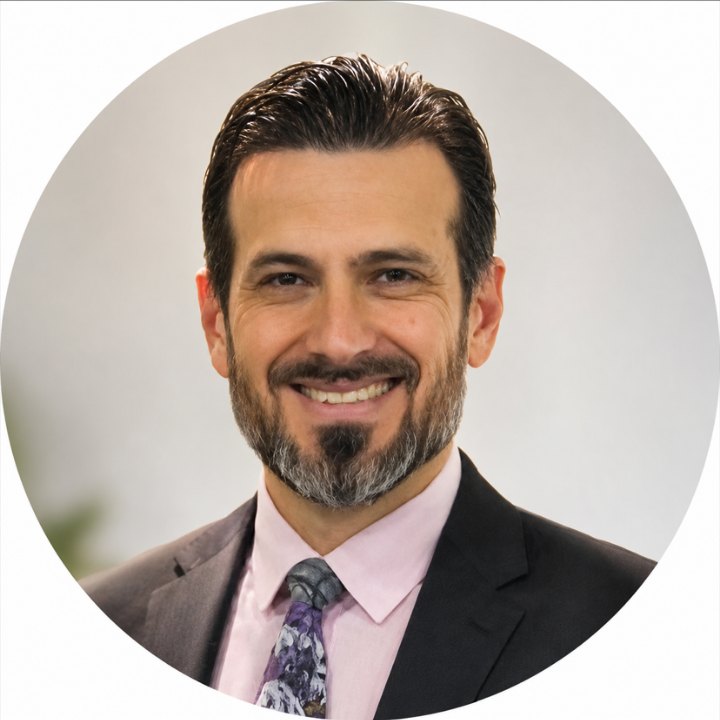
Fifteen years in the sector, four of them in behaviour support
I'm a Behaviour Support Practitioner, deemed suitable by the NDIS Quality and Safeguards Commission, with more than fifteen years in the disability sector. For the past four years I've provided behaviour support across Sydney, Canberra and the NSW South Coast — people of different ages, backgrounds and support needs, and behaviours of concern ranging from physical aggression to self-injury and compulsive behaviour.
Before that I worked in supported independent living and one-to-one community settings. That's where the practical understanding comes from: everyday life for people with complex physical, personal and behavioural support needs. It also means I've been the worker writing up the shift at nine o'clock at night, and the practitioner trying to find out what was tried last year and why it stopped.
Behaviour communicates something. Effective support starts by understanding the person, not by reaching for a strategy. I work with participants, families and support teams to build plans practical enough to actually be followed and written plainly enough for the people using them day to day. The aim is never only fewer incidents — it's a better quality of life, more independence, stronger relationships, and a greater sense of safety and of being understood.
The same question I ask about a behaviour — what is actually going on here, and what would make it better? — is the one I've been asking about the systems around it.
CDS exists because of the distance between that intent and what the tools allow. The things that make support work well are held in people's heads and written down almost nowhere useful. The people delivering that support lose their evenings to admin most tools weren't designed around. Neither is a fact of life; both are design problems. Better outcomes for participants and less friction for the people supporting them are not competing goals — the same record, kept well, serves both.
Put the record where it belongs — with the person it's about — and give the people supporting them tools that fit the way they actually work.
Alongside the work I've spent ten years volunteering in compassionate listening and practical assistance for people facing mental health and personal challenges, in Australia and overseas. I'm currently completing a Bachelor of Arts in Clerical Counseling — Family, with a minor in Social Work.
The most rewarding part of the job is seeing a change make a real difference — to a participant, to their family, and to the people supporting them. The software is an attempt to make that happen more often.
The same four principles, in the practice and in the product
Understand before acting
Behaviour communicates something. The starting point is always understanding why it's happening, not jumping straight to a strategy. The profile is built the same way — context first, not a form.
Dignity and quality of life first
Support is built around what matters to the person, aiming to improve quality of life and reduce reliance on restrictive practices over time. That's why the participant holds the record, not the service.
Work with the whole team
Families, support workers, allied health professionals and support coordinators all have a part to play. Plans are built with the team, not handed down to it — and so is the profile they all contribute to.
Practical, in plain language
Strategies are written so the people using them day to day can follow them with confidence. Software should meet the same test: take work off the people doing the supporting, rather than adding a second job after hours.
Where it's up to
The platform is in active development and has not yet been used with real participants outside our own environment. We'd rather say that plainly than imply otherwise.
Built and running in development
- Participant and guardian accounts
- The seven-section profile
- Connections and consent
- Service agreements and invoicing
- AI-assisted case notes
A closed pilot
Sole traders — support workers and practitioners — and the participants they support. Small, deliberately: enough to find out which parts of the design don't survive contact with real work.
After that, provider organisations bringing rostering, payroll and claiming into use. We are not putting dates on either.
Built on AWS, in Sydney
The whole platform is serverless and defined as code. Identity runs on Amazon Cognito; the API on AppSync and Lambda; storage on DynamoDB and S3; AI on Amazon Bedrock; delivery through Amplify and CloudFront. Everything that holds participant data runs in the ap-southeast-2 (Sydney) region.
Infrastructure is deployed through an automated pipeline with security checks in the build, and there is a continuous verification layer that fails the build when a claim we've made about the system stops being true of the code.
ap-southeast-2
Participant data is stored in Sydney, and AI processing stays in Australia.
Serverless
No servers to patch, scales to nothing when idle.
Write-once
Guardian actions archived to storage that can't be overwritten.
Infrastructure as code
Every resource version-controlled and reviewable.
Talk to us
Whether you're a participant, a family member, a support worker, a practitioner or a provider — if any of this sounds like something you'd want, or something you think is a bad idea, we'd like to hear it.
For privacy and data-handling questions: privacy@centre4ds.com